By Arushi Kapoor, Founder, Art House Staging
For winter and holiday showings, stage art to keep rooms warm, clear and easy to read in both person and photographs. Set the lighting and viewing plan first, then add seasonal details sparingly so they support the home rather than obscure its art or architecture.
The November-to-January window can bring lower daylight and more evening presentations, which the plan identifies as the seasonal challenge. Treat each room under its actual showing conditions. A thoughtful artwork placement can create a focal point, while an overfilled mantel or busy display can distract from the room's strongest features.
Key takeaways
Review art in daylight and under the lamps used for evening showings.
Keep seasonal decor edited so artworks and architectural features remain visible.
Photograph the home in its real staged condition and review for glare or dark patches.
Write down who can move art or decor when showings and access schedules change.
Begin with the winter showing schedule
Ask the agent when photographs will be taken, when open or private showings are likely, and which rooms need to perform at dusk. The same artwork can feel calm in daylight and become a dark block when a room is lit mainly by lamps. Schedule a walkthrough at the time that matters most, and record the window conditions, lamp positions and camera views. That observation gives the team a real basis for choosing placement and lighting rather than relying on a daytime visit that does not reflect the planned presentation.
Make a room list with one staging objective per space. The entry might need a clear first focal point; the living area may need an artwork that relates to the fireplace; a corridor may work better with a restrained pause than a row of decorations. Note where a tree, wreath or seasonal arrangement is planned, because it can change the available wall and table space. Agree in advance which seasonal items are essential and which can be removed if they make the artwork or room feel crowded.
Choose art that reads in lower winter light
Check each candidate work in the room, or use accurate images and measurements if it cannot be present during planning. View it beside the window at different times and with the lamps the agent expects to use. Consider whether its contrast remains clear from the main entrance and whether color still feels deliberate in an evening photograph. Do not assume that a dark or pale work will behave the same way in every room; wall color, nearby finishes, camera position and lighting all affect its visual role.
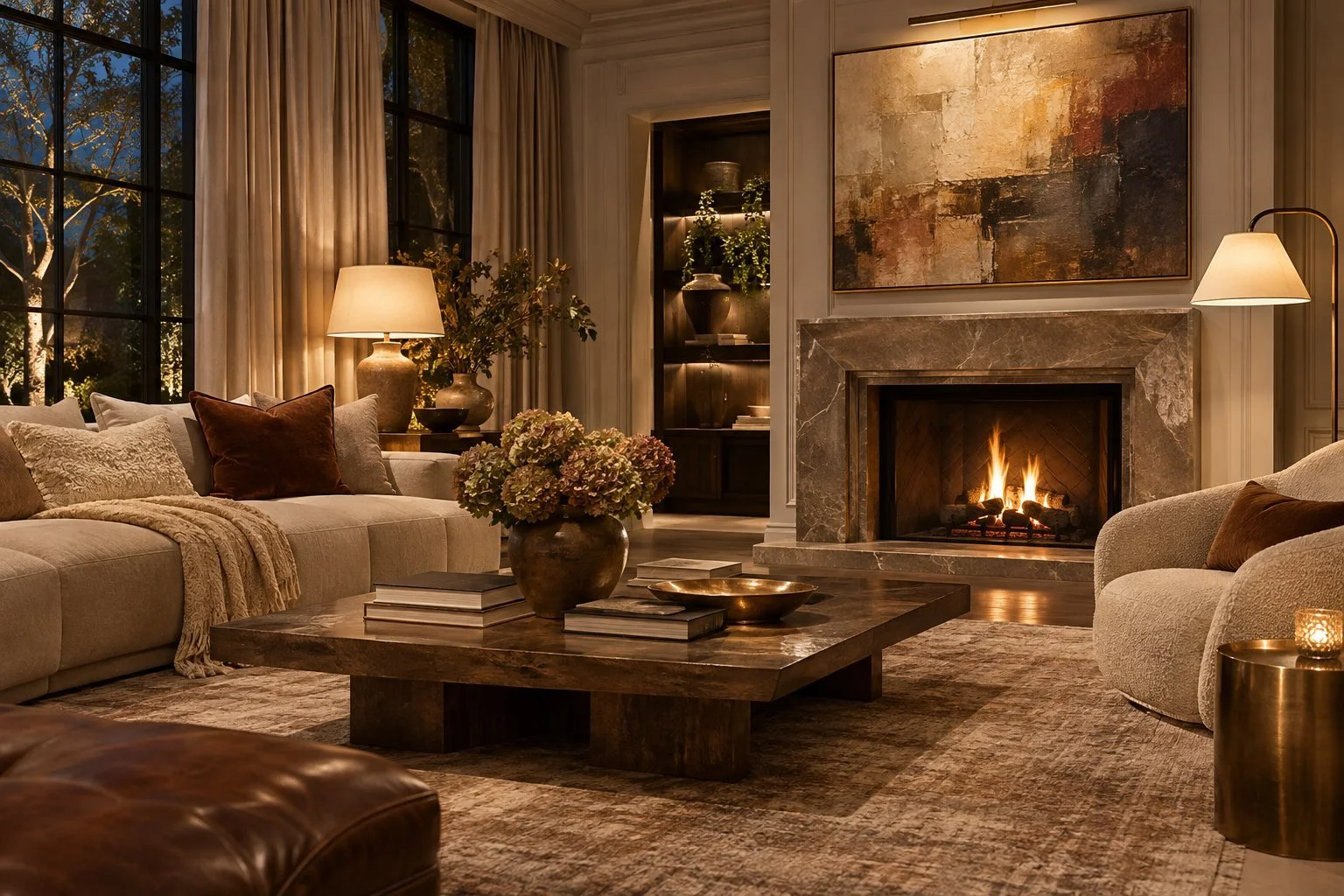
The brief's 2026 staging commentary describes large art as a focal point on an otherwise empty wall and a single deep-toned accent in a neutral home. Either approach can help a winter room feel composed, but only if the placement is balanced with available light. A strong accent can anchor a sitting area, while a quieter work may keep attention on a view or architectural detail. Test the choice from the actual photo angles before confirming it for the showing plan.
Keep holiday details from competing
Seasonal decor should have a defined footprint. Before it arrives, mark the wall, mantel, console or tabletop it will occupy and decide whether an artwork nearby should stay, move or be omitted. Avoid layering multiple focal points in one view. A decorated mantel, a large painting and a prominent arrangement may each be attractive on its own, yet together they can make the room hard to read. Leave enough visual space around the piece that leads the room, and preserve clear access to windows, doors and the planned circulation route.
Use the home's existing palette as the boundary for seasonal choices. A limited number of colors can connect temporary decorations to the room without requiring exact matches. If decor introduces a new accent, decide whether the art should echo that note or remain neutral. Ask the agent to approve changes that affect listing photography, and assign someone to return the room to its agreed state after a private event or showing. A simple photo of the finished arrangement can help the team reset it consistently without adding extra objects over time.
Plan light for showings and photographs
Walk through the property with the lights that will actually be used. Note artwork that disappears into a dim corner, picks up a visible reflection or is overwhelmed by a bright source in the frame. Adjust the room setup, the camera position or the lighting plan and review the result again. If a picture light or temporary fixture is proposed, confirm its installation and power arrangements with the property contact. Do not assume that a fixture that looks good to the eye will produce the same result through a camera lens.
For every priority room, capture a test photograph from the planned angle and inspect the artwork at full view, not only as a thumbnail. Look for a washed-out surface, glare, a strong shadow or a color cast that makes the room appear unlike the in-person setup. The American Institute for Conservation and NEDCC preservation leaflets are listed care references if a team needs guidance about the handling and care of objects. When a work has specific care needs, defer to its owner or qualified professional instead of improvising seasonal light exposure or handling.
Keep access, handling and reset responsibilities clear
Holiday calendars can change who is at the property and when a staging team can enter. Put the approved artwork locations, the contact for changes and any handling instructions in the access plan. Identify who can adjust decor, who can authorize moving an artwork and who will check the room after a showing. If an owner is present, confirm which personal objects can be moved and how they should be returned. Do not leave those decisions to a visitor or an agent working under time pressure.
Also confirm the period for which each temporary piece and decorative object will remain. Record delivery, removal and any planned changes before the listing schedule fills up. This is not a substitute for the project's existing staging or insurance arrangements; it is a way to keep the presentation plan aligned with them. If access is limited, prioritize the artwork and seasonal edits visible in the listing's primary photographs. The team can then preserve the most important choices even when it cannot adjust every room before each appointment.
Photograph the home as visitors will see it
The image should represent the actual room, art and seasonal treatment a visitor encounters. Review the final photographs against a walkthrough and remove or correct anything that creates a misleading impression of scale, light or placement. If a photo angle hides a seasonal object or makes a room appear substantially different, choose another angle or adjust the staging. Keep art centered in the story of the room only when it is truly the focal point. Listing photography should help a buyer understand the property rather than promise an arrangement that will not be present.
The National Association of Realtors' Profile of Home Staging is a reference for staging context, while the American Institute for Conservation and NEDCC offer listed care resources. Our related pieces on staging art for listing photography and art for open houses and broker previews cover adjacent planning questions. A winter-ready art plan is successful when the room feels intentional in its real light, remains easy to reset and keeps seasonal touches in proportion to the home.
Common questions
How should art be staged for winter showings?
Review placements at the time of day the home will be shown, using the actual lamps and camera angles. Keep the focal work visible and the seasonal decor restrained.
Should holiday decorations be removed for listing photographs?
Not automatically. Keep only details that support the room and do not obscure art, architecture or circulation, then photograph the home as visitors will see it.
Can seasonal lighting be added near staged art?
Confirm any added fixture with the property contact and review a test photograph. For works with particular care needs, follow the owner's or a qualified professional's instructions.
Sources
Related reading
About the author
Arushi Kapoor is the founder of Art House Staging and The Agency Art House. Her team places gallery-quality art in luxury listings, model units and new developments for agents and developers in Los Angeles, Miami, New York and Seattle. She was named to the Forbes 30 Under 30 list in Art & Style.